Meme coin trading versus buying and holding as the better way to learn fast with small capital
Need articles like this for your video? They help promote it on YouTube and Google — order them in the Telegram bot @sat_sit_bot. The bot writes and publishes the articles itself (with your YouTube video embedded) on popular topical websites (no ads). Free trial — 50 articles.
Key takeaways
- Meme coins are community-driven tokens with no cash flow, so price is set purely by attention and liquidity flow.
- A pro-style meme coin session runs on Solana through tools like Axiom, with entries measured in seconds, not days.
- Position sizing of 1-5% of the bankroll per trade is the norm; most new pairs go to zero, so winners must outrun losers.
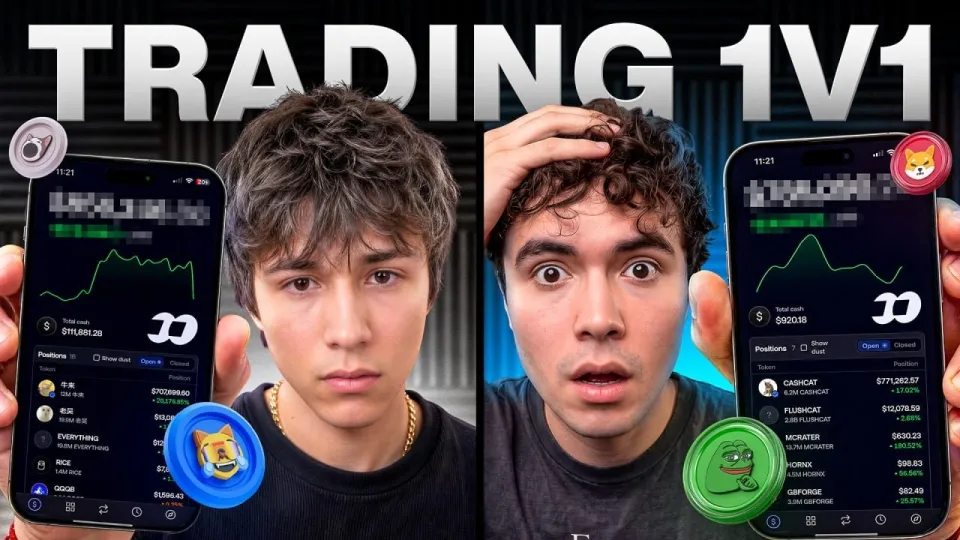
- insentos tested a live meme coin trading challenge against a guest trader, with advice segments and a joint trading block.
- Faster execution and exit discipline matter more than picking the 'right' coin, because liquidity can vanish in one candle.
A meme coin is a token whose price depends almost entirely on attention and liquidity rather than revenue, so the better approach is active, small-size trading with strict exits instead of long-term holding. Buying and forgetting only works if a community keeps growing for months, which is rare; trading lets you take profit while momentum is still there. The practical route into this market starts with a fast execution tool and a referral bonus such as the FOMO registration link, and the rest is risk control.
What a meme coin actually is and why holding is the weaker default
A meme coin is a fungible token launched with little or no product behind it, where narrative, memes and community activity drive demand. Because there is no cash flow to value, price discovery happens on-chain in real time: new pairs appear on Solana and Ethereum every minute, liquidity is thin at launch, and the same liquidity can disappear within one candle. That structure rewards reacting to flow and punishes patience, which is why a holding strategy is the weaker default for anyone starting with a small bankroll.
The mechanics that matter for a beginner:
- Liquidity, not market cap, decides whether you can exit. A token with a $2M valuation and $40k of liquidity will move 30% against you on a single sell.
- Supply concentration matters. If the top 10 wallets hold a large share, the chart is a countdown, not an opportunity.
- Launches are cheap. Anyone can mint a token in minutes, so the base rate of failure is extremely high and the default assumption should be that a new pair goes to zero.
Because of that base rate, the edge is not in finding one coin to hold for a year. It is in taking many small, fast trades where the average win is larger than the average loss.
How a live pro meme coin session is actually structured
The channel insentos published a challenge video in August 2026 titled "I Challenged A Pro Memecoin Trader (Who Won?)" in which the host trades alongside a guest and mixes live execution with explanation. The structure is worth copying: a long trading and advice block, a separate joint trading segment with the guest, and a short outro. The point of the format is that viewers see decisions in real time rather than a highlight reel of winning charts.
A realistic session looks like this:
- Pre-session setup: wallet funded, trading terminal open, watchlists of fresh pairs and recently graduated tokens ready.
- Screening: filter by liquidity, holder count, age of the pair and recent volume, then discard everything that fails the checklist.
- Execution: enter small, set an invalidation level before entry, and sell into strength rather than hoping for a second leg.
- Review: log every trade with the reason for entry and exit, because the pattern only appears across dozens of trades.
What separates this from gambling is the pre-commitment. The decision to sell is made before the position is opened, not while the chart is red and the timeline is screaming.
Execution tools and the workflow around them
Speed of execution is the main technical edge in meme coin trading, and terminals built for on-chain trading exist precisely because a standard exchange interface is too slow for a pair that lives for twenty minutes. Axiom (https://axiom.trade/) is the terminal referenced in the video description, and it is representative of the category: token discovery feeds, one-click buying, slippage and priority-fee settings, and wallet tracking.
The workflow that works for most beginners:
- Open the terminal and connect a dedicated hot wallet holding only the trading bankroll.
- Set slippage deliberately. Too low and the transaction fails while the price runs; too high and you become the exit liquidity for a large seller.
- Use priority fees on Solana during congestion, but cap them so fees do not eat a small position.
- Keep a second, cold wallet for anything you do not intend to trade, and never connect it to a new site.
A referral or bonus link is only useful if the underlying tool is one you will actually use daily; the FOMO link in the description is a registration route, not a strategy.
Position sizing and risk rules that keep a small account alive
Survival in meme coins is a sizing problem before it is a picking problem, because the distribution of outcomes is dominated by a long tail of total losses. A workable framework for a beginner account is 1-5% of the bankroll per trade, with a hard cap on how many positions are open at once so that one bad hour cannot wipe the account.
Concrete rules that hold up in practice:
- Risk a fixed amount per trade, not a fixed percentage of whatever is left after a loss.
- Take partial profit on the first strong move; a doubled position that round-trips to zero is the most common beginner story.
- Cut immediately if liquidity drops or the top holders start distributing, regardless of the chart pattern.
- Stop trading after a set number of losses in a session, because tilt is the real account killer.
One recurring observation from viewers of this genre of content is that these videos often end in a loss, and that trading from an account with reach is easier than trading anonymously. Both points are fair: audience attention can move a small token, and a recorded session is not the same as a silent one. Treat any live challenge as a demonstration of process, not as proof of a repeatable edge.
Common beginner questions about meme coin trading
Beginners usually ask the same handful of things, and the honest answers are less exciting than the marketing. The first is capital: you can start with a very small amount, but fees, priority costs and failed transactions mean a $50 account is mostly a tuition payment, not an income stream. The second is time: this is a screen-intensive activity where the useful skill is pattern recognition built over hundreds of trades, not a course completed in an afternoon.
The third is community access. A frequent complaint under trading videos is that groups and communities are advertised heavily but hard to actually join; the practical answer is to build your own small circle of two or three traders who share screens and post-mortems, which is more useful than a large paid chat. The fourth is the "50 to 1000" style challenge format, which is entertaining but mathematically brutal: turning a tiny balance into a large one requires repeated all-in risk, and the same behaviour that produces the win produces the wipeout.
Useful links
- FOMO registration and bonus route: https://fomo.family/r/insentos
- Axiom trading terminal: https://axiom.trade/
- insentos on X: https://x.com/insentos
- insentos on Instagram: https://www.instagram.com/insentos
- insentos on TikTok: https://www.tiktok.com/@insentos
Bottom line
Active meme coin trading beats passive holding for most participants because the asset class is driven by short bursts of liquidity and attention, and holding through the fade is how small accounts die. The discipline that matters is unglamorous: small positions, pre-planned exits, a terminal you know well and a written log of every trade. The insentos challenge video is a useful look at that process in real time, with a guest who keeps explaining decisions while the position is live. Start with money you can lose, use the FOMO sign-up route if you want the referral terms, and judge yourself on process rather than on one session's result.
Source: I Challenged A Pro Memecoin Trader (Who Won?) · Markdown version
Questions & answers
Is meme coin trading better than just buying and holding a token?
For most beginners, yes, because meme coins are driven by short-lived attention and thin liquidity, so a position can lose most of its value while you wait for a comeback. Trading with small size and predefined exits lets you take profit during momentum instead of holding through the fade. Holding only makes sense when a community keeps growing for months, which is rare.
How much money do I need to start trading meme coins?
You can technically start with a few dozen dollars, but fees, priority costs and failed transactions make very small accounts mostly a learning expense. A realistic starting bankroll is one you can lose entirely without affecting your finances, traded at 1-5% per position. Treat early losses as tuition for pattern recognition.
Why do so many live trading challenge videos end in a loss?
Because the format shows a single session, and one session is a tiny sample of a strategy with a high failure rate per trade. Recording also changes behaviour, and trading from an account with an audience can move a small token in ways an anonymous trader cannot. Judge the process shown, not the final number.
Which tools do meme coin traders actually use?
Most use an on-chain trading terminal rather than a standard exchange, because new pairs live for minutes and execution speed decides the outcome. Axiom is one example, offering token feeds, one-click buying and slippage or priority-fee settings. A dedicated hot wallet holding only the trading bankroll is standard practice.