How Live Futures Day Trading Works in 2026 With Prop Firm Capital
Need articles like this for your video? They help promote it on YouTube and Google — order them in the Telegram bot @sat_sit_bot. The bot writes and publishes the articles itself (with your YouTube video embedded) on popular topical websites (no ads). Free trial — 50 articles.
Key takeaways
- Live futures day trading is real-time index and commodity trading on streamed sessions, funded through prop firm evaluations rather than personal capital.
- Prop firm rankings in the space put Lucid Trading first, TakeProfitTrader second and Apex Trader Funding third.
- A two-hour course teaching the streamed strategy is priced at $99 on onlypropfirms.com.
- Viewer questions on live streams most often ask what setup is being traded and where the same setup can be bought.
- Copy trading and prop evaluations both carry payout rules, drawdown limits and platform restrictions that decide the real risk.
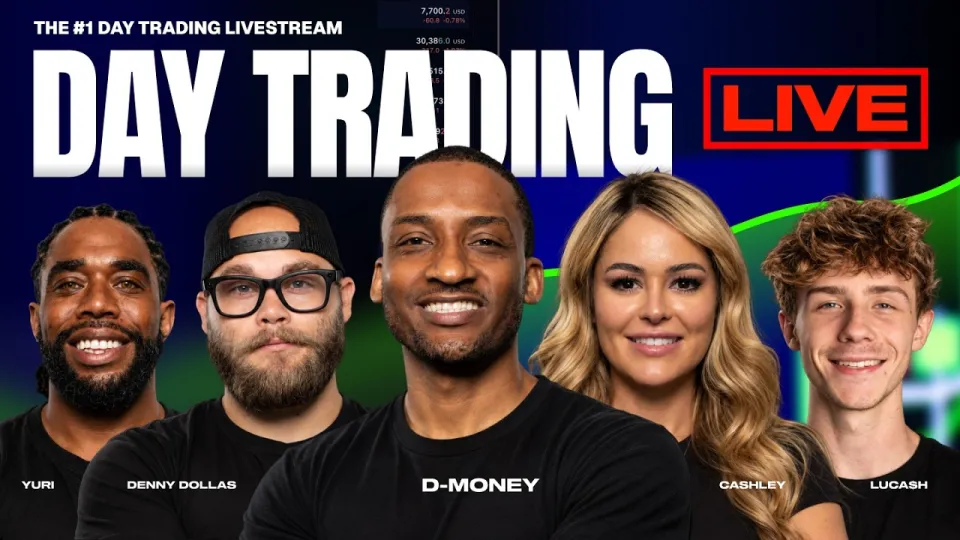
Live futures day trading is trading index and commodity futures contracts in real time on an intraday basis while the session is streamed, usually on a prop firm account rather than personal capital. The model works because a trader passes an evaluation, gets access to a funded account, and keeps a share of profits while the broker-side risk stays capped by drawdown rules. In 2026 the format has become a full ecosystem: live shows, firm rankings, discount codes and paid strategy courses feed each other.
What live futures day trading actually involves
Live futures day trading means opening and closing contracts such as the E-mini S&P 500, Nasdaq or crude oil during the trading day, with no positions held overnight. The economics are simple but unforgiving: futures are leveraged, so a small move in the underlying index produces a large swing in account equity, and each round turn costs commission plus exchange fees.
A typical streamed session is built around three activities:
- Pre-market preparation — marking levels, checking economic releases and setting the instruments to watch.
- Live execution — entries, stops and targets narrated as they happen, so the audience sees the decision process rather than a finished result.
- Post-session review — what worked, what was skipped and how the account stands relative to the firm's rules.
The educational value sits mostly in the second and third parts. Watching a trader take a loss and explain the stop placement teaches more than a highlight reel of winners, which is why the live format has held its audience.
Prop firm rankings and what they mean for a trader
Prop firm rankings matter because the firm, not the trader, sets the rules that decide whether a payout ever arrives. The ranking published alongside the BDH stream lists Lucid Trading first, TakeProfitTrader second and Apex Trader Funding third, followed by Tradeify, Legends Trading, BluSky Trading, TradeDay and MyFundedFutures.
Rankings like this are usually built from a mix of payout speed, rule fairness, platform stability and pricing, but they are not neutral research. Many are affiliate-driven, which means the publisher earns a commission when a trader signs up through the link. Treat the order as a shortlist, not a verdict, and verify these points yourself before paying:
- Maximum drawdown type: end-of-day trailing versus intraday trailing changes how much room you really have.
- Payout schedule: how many profitable days are required before the first withdrawal.
- Consistency rules: some firms cap how much of your profit can come from a single day.
- Platform and data fees: monthly costs can quietly erode a small funded account.
Copy trading and the question of buying someone else's setup
Copy trading and paid setups are the two shortcuts traders ask about most, and both deserve skepticism. On a live stream, the most common chat questions are what setup is being traded right now and where that exact setup can be purchased. The answer in this ecosystem is a two-hour course priced at $99, sold through onlypropfirms.com, which teaches the strategy the host trades on stream.
A $99 course is a low-cost way to learn a defined framework, but it is not a funded account and not a signal service. Two things are worth separating:
- A rule-based setup — defined entry, stop and target conditions you can test on your own data.
- A live call — a discretionary decision made in the moment that depends on context you may not see.
Copy trading adds a second layer of risk: you inherit someone else's position sizing, their drawdown tolerance and their timing, while your account may have tighter rules. If a copied trade breaches your firm's daily loss limit, the consequence lands on your account, not theirs.
How a funded futures account is structured
A funded futures account is a prop firm evaluation account that converts into a profit split once you hit the firm's targets. The structure is broadly consistent across providers, though the numbers differ.
A standard path looks like this:
- Choose an account size — commonly between $25,000 and $150,000 in notional buying power.
- Pay a one-time or monthly evaluation fee.
- Hit a profit target without breaching the maximum drawdown or daily loss limit.
- Receive a funded account, then trade toward a payout, typically keeping 80–90% of profits.
The trap is sizing. A trader who passes a $50,000 evaluation by risking $1,000 per trade often blows the funded account within a week, because funded accounts frequently carry the same drawdown ceiling with less room for error. Position sizing, not the entry signal, is what keeps an account alive.
Common questions from live trading audiences
Questions from viewers of live futures streams cluster around a few recurring themes, and they are worth answering directly because they shape expectations.
What setup is being traded? Streams usually run one or two repeatable patterns rather than a dozen indicators, and the narration explains the trigger in real time. If you cannot describe the setup in one sentence after watching, you have not learned it yet.
Can I buy the exact setup? Yes, in this case through a $99 two-hour course, but a purchased framework still requires screen time and a tested risk plan before it produces consistent results.
Is the stream financial advice? No. Streams and their descriptions state clearly that the content is educational and entertainment only, that some links are affiliate links, and that futures trading carries substantial risk with no guarantee of future results.
Do I need a prop firm to trade futures? No, but a personal futures account requires real capital and carries unlimited downside relative to your deposit, which is why the evaluation model dominates the retail segment.
Risk, discipline and realistic expectations
Risk control is the part of day trading that determines survival, and it is less exciting than entries. Three rules cover most of the damage:
- Define the maximum loss per trade before the session starts, not during it.
- Cut size after two consecutive losses rather than increasing it to recover.
- Stop trading for the day once the daily loss limit is hit, even if a setup looks perfect.
Prop firm rules exist precisely because most traders violate these points under pressure. A trailing drawdown that follows your highest equity means a profitable morning can still end in a failed evaluation if the afternoon gives it back. Understanding the exact mechanics of your firm's drawdown — whether it trails unrealized or closed profit — matters more than any indicator.
Final thoughts on trading live futures in 2026
The live futures format works as education because it exposes process, mistakes and account management rather than only outcomes. Prop firm rankings, discount codes and a $99 strategy course are useful entry points, but the ranking list is affiliate-influenced and the course is a framework, not a guarantee. Anyone considering a funded account should read the drawdown and payout rules first, size positions to survive a losing streak, and treat copy trading as borrowed risk. This breakdown draws on the live futures show hosted by Patrick Wieland, whose channel documents the format session by session.
Source: LIVE DayTrading! #1 Watched Futures Trading Show! · Markdown version
Questions & answers
What is live futures day trading?
It is intraday trading of futures contracts such as the E-mini S&P 500 or Nasdaq while the session is streamed in real time. Positions are opened and closed within the trading day, and many traders run the strategy on a prop firm funded account rather than personal capital.
Do I need a prop firm account to day trade futures?
No, but a personal futures account requires your own capital and carries full downside risk. Prop firm evaluations limit the damage to the evaluation fee and the account's drawdown ceiling, which is why the model dominates retail futures trading.
Is buying a trading setup worth it?
A low-cost course such as the $99 two-hour program sold through onlypropfirms.com can give you a defined framework with entry, stop and target rules. It does not replace screen time or a tested risk plan, and a purchased setup is not a signal service.
What are the main risks of copy trading futures?
You inherit someone else's position sizing, timing and drawdown tolerance while your account may follow stricter rules. If a copied trade breaches your firm's daily loss limit or trailing drawdown, the failed evaluation is yours, not the trader you copied.